Showing posts with label dirac. Show all posts

Sunday, May 5, 2013

ORBX.js - is no open codec

Orb

I'm by no way an expert, but until now ORBX.js is - to me - not much more than a tech demo and not "the future".

ORBX seems to be a propietary video codec, which operates highly parallel - that there is ORBX.js - a javascript decoder for this codec - doesn't help the fact that it's proprietary. So I wonder what the fuzz is all about. As said: To me ORBX.js is currently not much more than a tech demo to illustrate JavaScript's (or more it's interpreters) capabilities. And currently I couldn't find any hint that ORBX - the codec - is going to be opened - which is also not as easy, as this would involve some sort of patent audit to sort out it's patent status.

At last I at least like the fact that it's now shown that there can be highly parallel video codecs, which can utilize the GPU from a high level language.
I wonder if this can be done with Dirac.

Saturday, September 8, 2012

Easier streaming with presence-0.4.8


Presence is a small - but yet flexible - tool to do simple and high-quality streaming (using dirac+vorbis over RTP) in a local broadcast domain.
When not using the MDNS feature this can also be endpoints on any routable network.
Not shown on in the screen shot, but a feature, is picture-in-picture mode for secondary streams.

Anyhow, this new release (0.4.8) contains an improvement related to publishing a stream. It's now done in two clicks with reasonable defaults, even for low-end machines.

Install or update it now on Fedora 16/17/18:
$ sudo yum clean metadata
$ sudo yum install --enablerepo=updates-testing presence
# or
$ sudo yum update --enablerepo=updates-testing presence

Or - hero-like -using this one-click technology.

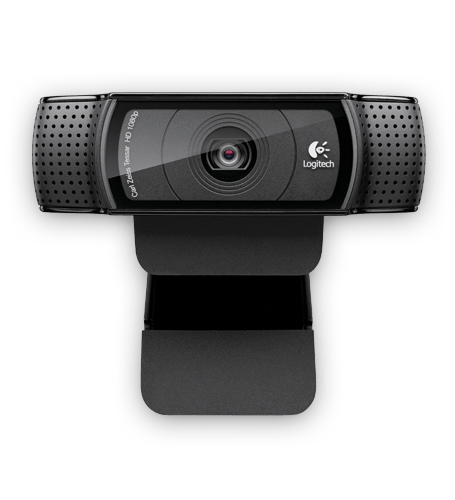
The release was motivated by my new Logitech HD Pro Webcam C920 which is working out of the box on Fedora - so YUV and MJPEG besides the (unsupported) h.264 support.
When looking at the video quality of this camera and two built-in cameras of laptops, this is clearly a big step forward in image quality - So a decent camera is always a good way to improve a video conference.
As said, the video quality is great - and using MJPEG it can deliver a 720p video with up to 24fps, so ideal for telepresence. 

Thursday, April 19, 2012

gstreamer as a multimedia backend in Firefox


Wow. After such a long time it happened. Gstreamer can be used as a multimedia backend in Firefox!

So what does this mean? I believe not much yet for the enduser, at least this is a very nice infrastructure change to enable stuff like hardware acceleration e.g. on mobile devices. And from my point of view also a good separation: Do one thing and do it well. Let gstream do the multimedia stuff and Mozilla all that compositing.

Maybe this can be enabled in Fedora - at compile time - to get an maybe accelerated experience. or better codec support e.g. h264 for those who need it (e.g. by using Fluendos codec pack) or even my always favored Dirac!

Wednesday, November 9, 2011

Presence and adjustable video quality.


Presence - a small vala, gstreamer, clutter and dirac/schroedinger - based bi-directional video tool, is configurable now.

You can actually use it to establish uni- or bi-directional audio/video streams in trusted/local networks. Sometimes this can be handy, as those streams can be set-up to have a much better quality than generic VoIP solutions ...
You can even receive more than one stream.

Currently you can adjust the video size, the compression quality and the framerate to get the optimal balance between performance and capabilities of the underlying hardware.
A next thing is to tune those parameters automagically - but I'll need to find out how to detect dropped frames or an increased latency. Additional there should be a way to adjust the latency/buffer on the receiving side, to match the amount of data coming in.

Find it on gitorious.

Friday, October 21, 2011

Da sein - Introducing presence a tool for »videoconferencing«


Intended purpose: Use this application to transmitt audio and video in an n-to-m-peers fashion in quite high quality and with a hopefully low latency. This can be the case in scenarios like connecting video walls, e-lecture or simple bi-directional two people communication.

Intended audience and requirements: This application is designed for an elite circle of users who are in a situation with:
  • no NAT problems, e.g. IPv6 users
  • one multicast domain or access to their DNS records
  • quite high bandwidth, like 2 Mb/s
  • secured transport way, aka VPN or or non-public network
  • multi-core systems (single core Intel Atoms are a no-go), but something like an AMD E-350
  • Fedora 16

Design: Trageting a very specific need (near-realtime bi-directional a/v transmission in a good quality, not caring about bandwidth and security) this tool also doesn't follow public standars like RFCs, but more builds ontop of available features (e.g. gstreamers rtpgstpay). On the other side standards are use:
  • RTSP stream control
  • dirac video codec
  • vorbis audio codec
  • mdns service discovery
  • Mx based interface
  • Fulscreen mode
  • IPv6 support
Currently presence is some kind of beta. Find out more on the appropriate page.